
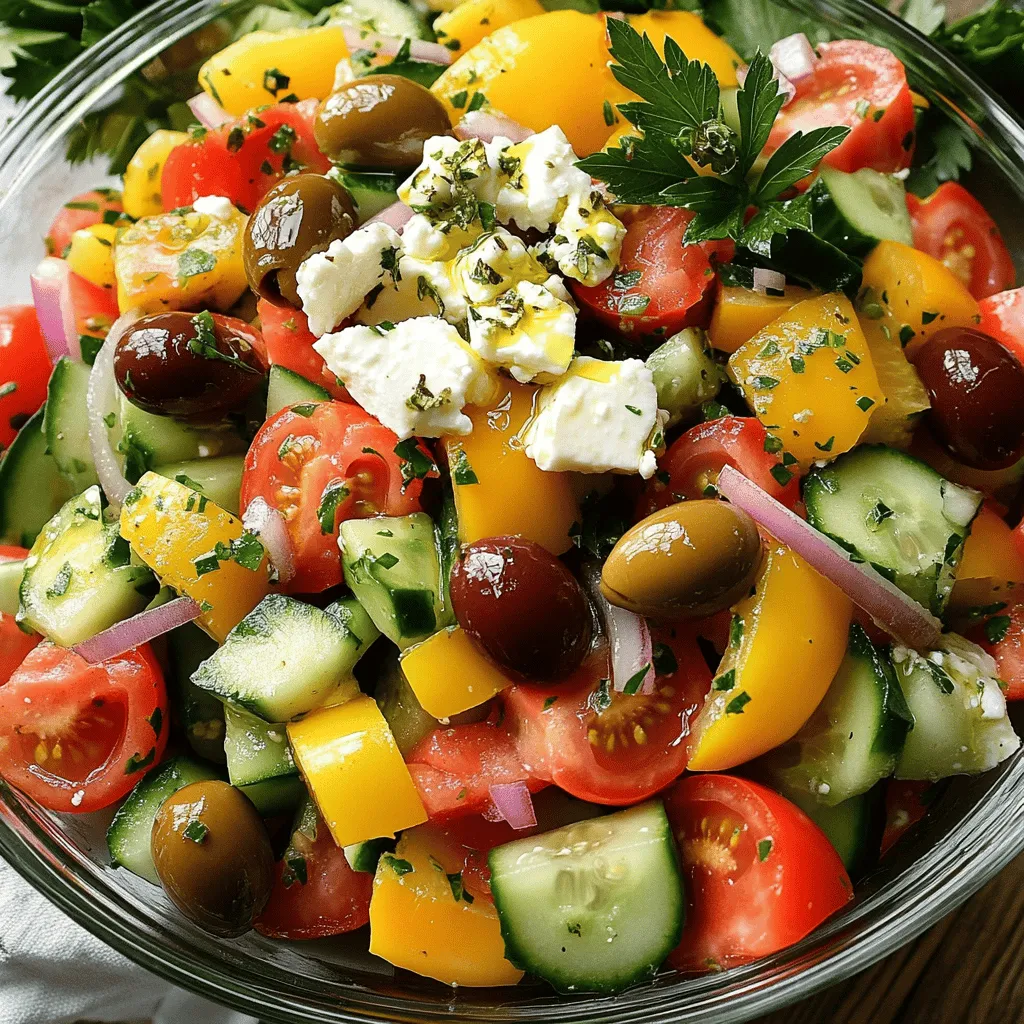
Are you ready to enjoy a dish that bursts with flavor and health benefits? In my exploration of Classic Greek Salad, I’ll show you how simple fresh veggies, creamy feta, and tart Kalamata olives come together. You’ll discover why using high-quality ingredients is key. Let’s dive deep into making this salad a standout on your table, perfect for any occasion. Don’t miss out on tips that elevate your salad game!
Ingredients
Key Ingredients for Classic Greek Salad
To make a delicious Classic Greek Salad, gather these key ingredients:
– 4 large ripe tomatoes, diced into bite-sized pieces
– 1 medium cucumber, peeled and diced
– 1 bell pepper (red or yellow), diced into small chunks
– 1 small red onion, thinly sliced for a milder flavor
– 200g feta cheese, crumbled into small pieces
– A generous handful of Kalamata olives, pitted
– 1/4 cup high-quality extra virgin olive oil
– 2 tablespoons red wine vinegar for tanginess
– 1 teaspoon dried oregano for an aromatic touch
– Salt and freshly cracked black pepper to taste
– Fresh parsley leaves, roughly chopped for garnish
Nutritional Benefits
Tomatoes and cucumbers are great for your health. Tomatoes are rich in vitamins and antioxidants. They help keep your heart healthy. Cucumbers are refreshing and hydrating. They give your body essential nutrients. Olive oil is full of healthy fats. It helps reduce bad cholesterol. Feta cheese adds protein and calcium. It also gives flavor and creaminess to the salad.
Quality Ingredients
Using high-quality olive oil is key. It enhances the salad’s taste and health benefits. Look for extra virgin olive oil for the best flavor. Choose fresh feta cheese for a creamy texture. Kalamata olives should be plump and flavorful. They add a briny touch that balances the salad. Good ingredients make all the difference in your Classic Greek Salad.
Step-by-Step Instructions
Preparation Steps
To start, grab a large salad bowl. This bowl will hold all your fresh veggies. First, chop 4 large ripe tomatoes into bite-sized pieces. Then, peel and dice 1 medium cucumber. Next, take 1 bell pepper and chop it into small chunks. For a milder taste, slice 1 small red onion thinly.
Once your veggies are ready, add them to the bowl. Use a large spoon or your hands to toss them gently. You want to mix them well but keep everything intact. This way, each bite will have a good balance of flavors.
Then, sprinkle 200g of crumbled feta cheese and a generous handful of Kalamata olives over the top. This creates a beautiful layer of color and texture.
Making the Dressing
In a small bowl, mix up your dressing. Combine 1/4 cup of high-quality extra virgin olive oil and 2 tablespoons of red wine vinegar. Add 1 teaspoon of dried oregano for that classic flavor, along with a pinch of salt and freshly cracked black pepper.
Now, whisk these ingredients together until they blend smoothly. You want your dressing to have a nice balance of tanginess. If it feels too sharp, add a bit more olive oil.
Tossing and Serving
It’s time to toss your salad! Drizzle the dressing over the veggies and feta. Use gentle motions to mix everything together. Be careful not to break the feta into tiny bits.
Once tossed, taste your salad. If it needs more salt or pepper, add it now. Finally, garnish with freshly chopped parsley leaves for a pop of green.
For serving, place your salad in a nice bowl. You can serve it chilled or at room temperature. It pairs great with crusty bread or grilled meats. Enjoy this flavorful delight!
Tips & Tricks
Enhancing Flavor
To make your Greek salad even better, think about adding fresh herbs. You can use basil, mint, or dill for a twist. These herbs give a burst of flavor that brightens the dish. If you prefer more spice, try a pinch of crushed red pepper flakes.
Adjusting the seasoning is key. Taste your salad after you mix it. If it needs more salt or pepper, add a bit until it suits your taste. Remember, fresh ingredients often shine with just a little seasoning.
Time-Saving Tips
Prep can be quick! Chop your veggies in advance. Store them in the fridge until you are ready to serve. This way, you can throw the salad together in minutes.
For busy days, make the salad a few hours ahead. Just keep the dressing separate until serving. This keeps everything fresh and crunchy.
Common Mistakes to Avoid
One common mistake is overdressing the salad. A little dressing goes a long way. Start with a light drizzle and add more if needed. You want the flavors to shine, not drown.
When cutting your vegetables, aim for even pieces. This helps with texture and makes each bite enjoyable. For the cucumber, slice it thin for a crisp bite. For tomatoes, chop them into similar sizes as the other veggies. This way, every forkful is balanced and tasty.

Variations
Alternative Ingredients
You can swap vegetables based on what is in season. For example, use ripe summer squash or radishes. These changes add freshness and flavor to your salad.
Different types of cheese or olives can also change the taste. Try using goat cheese or creamy burrata instead of feta. For olives, switch to green olives for a milder flavor. Each option gives your salad a new twist.
Dressing Variations
The dressing is key to a Greek salad. You can experiment with lemon juice instead of vinegar. This adds a bright, zesty flavor. Different types of vinegar, like balsamic or apple cider, also work well.
For a creamy twist, add yogurt or tahini to your dressing. This makes it richer while adding a unique taste. These variations keep your salad exciting each time you make it.
Serving Style
Presentation can elevate your salad. Serve it in a large, colorful bowl for gatherings. You can layer the ingredients for a beautiful display. This makes your dish a showstopper at any meal.
You can also use Greek salad as a base for a main dish. Add grilled chicken or shrimp for protein. This turns a simple salad into a hearty meal.
Storage Info
Proper Storage Techniques
To keep your Greek salad fresh, store it in an airtight container. Layer the ingredients separately if possible. This way, the vegetables stay crisp, and the feta doesn’t get soggy. Adding a piece of paper towel inside can help absorb extra moisture. If you have dressing left, store it in a small jar. This keeps the salad vibrant and tasty.
Freezing and Reheating
You should not freeze Greek salad. Freezing changes the texture of the fresh vegetables. They become mushy when thawed. If you ever need to keep leftovers, try to eat them within a few days. For reheating, it’s best not to heat the salad at all. Enjoy it cold for the best flavor.
Shelf Life
Greek salad lasts about 3 to 5 days in the fridge. After that, it may start to spoil. Look for signs of spoilage like a slimy texture or unusual odors. If the veggies are soggy or the feta smells off, it is time to toss it. Enjoy your Mediterranean Bliss Greek Salad while it’s fresh!
FAQs
Common Questions About Classic Greek Salad
What makes a salad “Greek”?
A salad is considered Greek mainly for its ingredients. It features fresh veggies like tomatoes, cucumbers, and bell peppers. Feta cheese and Kalamata olives are key. The dressing often includes olive oil and red wine vinegar. These ingredients reflect the flavors of Greece. They create a fresh, bright taste that is both healthy and satisfying.
Can I make Classic Greek Salad vegan?
Yes, you can make a vegan version! Simply replace feta cheese with a plant-based cheese. You can use tofu or cashew cheese for a creamy texture. Just ensure the olives you choose are vegan-friendly. This way, you keep the salad tasty and suitable for everyone.
Ingredient Substitutions
What can I use instead of feta cheese?
If you’re out of feta, there are great substitutes. Try using ricotta or goat cheese for a similar taste. Vegan options include crumbled tofu or almond cheese. Each option gives a unique twist to the salad while keeping it delicious.
Alternatives to olives for those with allergies
If olives are an issue, skip them or swap in capers. Capers add a similar briny flavor. You can also use artichoke hearts for a different texture. Just remember, the salad will still taste great!
Serving Suggestions
What do you serve with Greek salad?
Greek salad pairs well with many dishes. Grilled chicken or fish complements the fresh flavors. You can also serve it with crusty bread for a light meal. It makes a great side for roasted meats or a tasty appetizer.
Best wines to pair with Classic Greek Salad
For wine, consider a crisp white like Sauvignon Blanc. This wine enhances the bright flavors of the salad. A light red, such as Pinot Noir, can also work well. Both options will elevate your dining experience.
In this post, we explored the classic Greek salad. We discussed key ingredients like fresh veggies, feta, and Kalamata olives. You learned about their health benefits and the importance of using quality items. I shared step-by-step instructions to help you prepare the salad with ease.
By following my tips, you can avoid common mistakes and customize the dish. Remember, Greek salad is not just a side; it can shine as a main dish too. Enjoy experimenting with different flavors, and make this salad a staple in your kitchen.