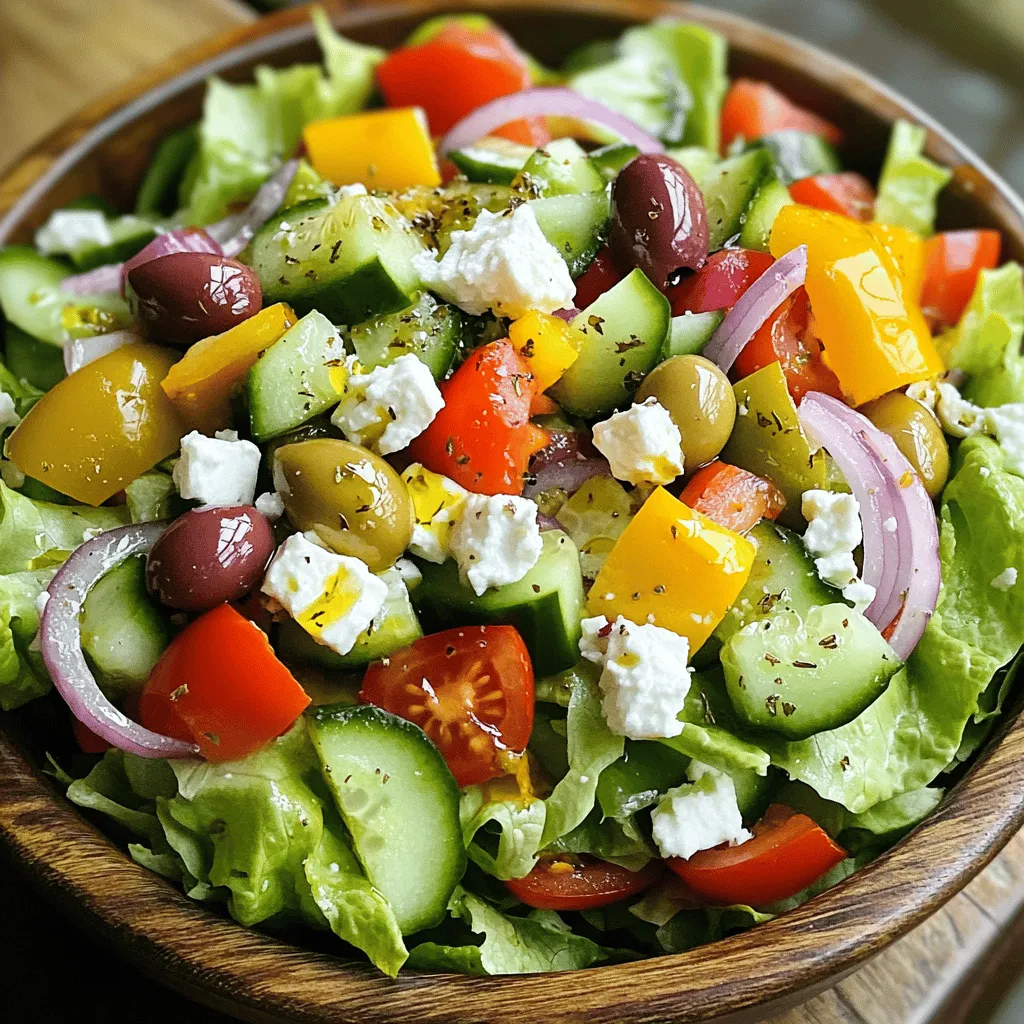
If you crave a fresh and healthy dish, a Classic Greek Salad is a must-try. This vibrant salad combines crisp Romaine lettuce, juicy tomatoes, and tangy feta cheese to create a burst of flavors in every bite. With simple ingredients and easy preparation, you’ll enjoy whipping up this delightful dish. Ready to impress your family and friends? Let’s dive into the recipe and tips that make this salad a true culinary star!
Ingredients
Main Ingredients for Classic Greek Salad
– Fresh Romaine lettuce
– Ripe tomatoes
– Cucumbers
– Kalamata olives
– Feta cheese
Dressing Ingredients
– Extra virgin olive oil
– Red wine vinegar or lemon juice
– Dried oregano
– Salt and pepper to taste
Suggested Serving Sizes
– Aim for about 1.5 cups per serving.
– Scale up by multiplying ingredients for larger groups.
When I craft a Classic Greek Salad, I focus on fresh, high-quality ingredients. The Romaine lettuce forms a crisp base. I love using ripe tomatoes for a juicy bite. Cucumbers add crunch and freshness. Kalamata olives bring a briny richness. Feta cheese gives a creamy texture and tang.
For the dressing, I mix extra virgin olive oil with red wine vinegar. You can also use lemon juice for a bright touch. Dried oregano adds that authentic flavor. Finish with a sprinkle of salt and pepper to taste.
When serving, I recommend about 1.5 cups per person. If you have more guests, simply multiply the ingredients. This way, everyone gets a taste of this fresh and flavorful delight.
Step-by-Step Instructions
Preparing the Salad Base
Start by choosing a large, attractive salad bowl. This will showcase your fresh ingredients. I like to use a clear glass bowl. It makes the colors pop! Next, layer the chopped Romaine lettuce at the bottom. This crisp lettuce forms the base of your salad.
Adding Vegetables
Now, it’s time to add the vegetables. Begin with the cucumber. Slice it into half-moon shapes for great texture. Then, chop the tomatoes into medium cubes. Their juicy flavor is a must! Add the bell pepper, cutting it into bite-sized chunks. Each vegetable adds color and taste to your dish.
Final Touches
Once your base is set, layer in the Kalamata olives. Their briny taste enhances the salad. Next, crumble the feta cheese over the top. It adds creaminess that pairs perfectly with the veggies.
Now, let’s make the dressing. In a small bowl, mix the extra virgin olive oil, red wine vinegar, and oregano. Add salt and pepper to taste. Whisk until it becomes smooth and golden. Drizzle the dressing over the salad. Use salad tongs to gently toss everything together. This helps blend the flavors without breaking the feta too much.
Taste the salad to see if it needs more salt or pepper. If you want a stronger flavor, adjust it now. For the best experience, serve the salad right away. You can also chill it for 15 minutes. This allows the flavors to marry beautifully. Enjoy your Classic Greek Salad, fresh and flavorful!
Tips & Tricks
Achieving Authentic Greek Flavor
To make a Classic Greek Salad, quality matters. Use the best feta and olives. Feta brings creaminess, while olives add a briny zest. I recommend brands like Dodoni for feta and Kalamata olives from the Greek Isles. These choices ensure you capture true Greek taste.
Serving Suggestions
Pair your salad with warm pita bread for a classic touch. Grilled meats, like chicken or lamb, also complement the fresh flavors. For a stunning presentation, serve in chilled bowls. A sprig of fresh oregano or extra feta crumbles on top looks fabulous.
Common Mistakes to Avoid
Avoid overdressing your salad. Too much dressing masks the fresh ingredients. Use just enough to coat them lightly. Also, be careful when preparing vegetables. Cut them evenly for the best texture and taste. Big chunks can ruin the bite, while too-small pieces may get lost.
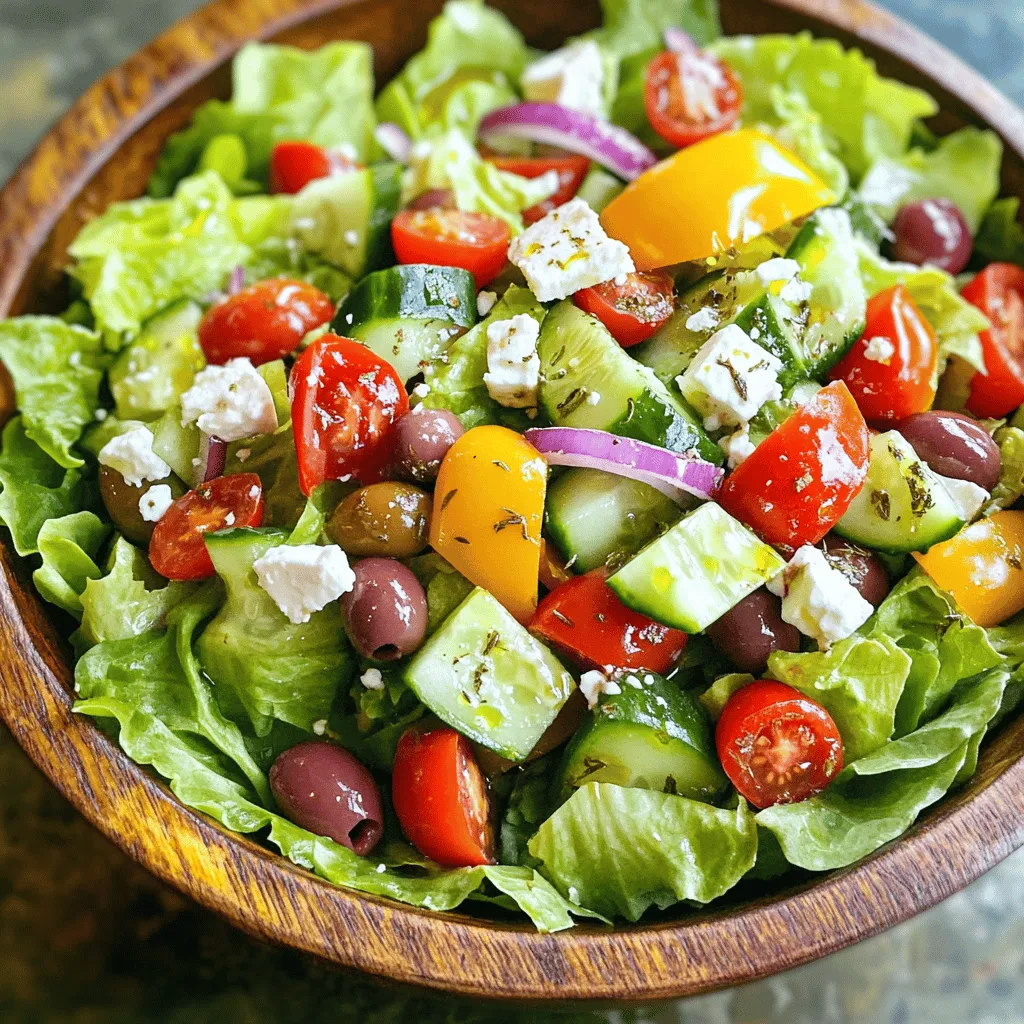
Variations
Customizing Your Salad
You can make your Greek salad unique by adding proteins. Grilled chicken or chickpeas give a nice boost. They add heartiness and flavors that mix well.
You can also explore alternative dressings. Try a honey mustard or a spicy yogurt dressing. These options can change the taste and make it exciting.
Seasonal Variations
In spring and summer, you can add fresh herbs like basil or mint. They bring a bright, refreshing flavor to your salad. You might also try adding ripe avocados for creaminess.
During winter, consider warming things up. You can add roasted vegetables like sweet potatoes or bell peppers. These additions create a cozy, comforting version of the Greek salad.
Dietary Substitutions
If you’re vegan, you can swap the feta cheese. Look for vegan feta or use avocado slices for creaminess. These options still keep the salad delicious.
For gluten-free choices, be sure to check the labels of your ingredients. Most fresh veggies and olives are naturally gluten-free. This way, everyone can enjoy your Greek salad!
Storage Info
Best Practices for Storing Leftovers
To keep your Greek salad fresh, store it in an airtight container. This prevents moisture loss and keeps flavors intact. If you mix your salad, it lasts about one day in the fridge. If you keep the ingredients separate, they can last up to three days. This way, you enjoy crisp veggies and creamy feta longer.
Freezing Options
Can you freeze Greek salad? It’s not recommended. The veggies become soggy when thawed. However, you can freeze the dressing. Pour it into ice cube trays. Once frozen, store the cubes in a bag. This way, you have dressing ready for your next salad.
Reheating Guidelines
To refresh a chilled salad before serving, bring it to room temperature. Take it out of the fridge about 15 minutes before serving. Toss it gently to mix the flavors again. This helps restore the salad’s vibrant taste, making it a delightful dish every time.
FAQs
What is the origin of Greek Salad?
Greek salad has roots in the Mediterranean. It celebrates fresh, local ingredients. This dish reflects the Greek way of life, which values simplicity and freshness. Traditionally, it features tomatoes, cucumbers, and olives. Feta cheese is a key part, adding rich flavor. The salad symbolizes Greek culture and hospitality. In Greece, it’s common to enjoy this salad with meals. Each bite offers a taste of the land and sea.
Can I prepare Greek Salad ahead of time?
Yes, you can prepare Greek salad ahead of time! To do this, chop your veggies early in the day. Store them in a bowl, but keep the dressing separate. This way, your salad stays crisp and fresh. Combine the salad and dressing just before serving. If you want to enhance the flavors, let it chill for 15 minutes. This allows the tastes to blend nicely.
What can I substitute for feta cheese?
If you need a feta cheese substitute, try goat cheese or queso fresco. Both options offer creamy textures and tangy flavors. For a vegan option, use tofu or cashew cheese. These alternatives can mimic the taste of feta without dairy. When using substitutes, adjust the seasoning to enhance the overall flavor. Feel free to experiment and find the best fit for your palate.
In this post, we explored the essentials for making a Classic Greek Salad. I covered the key ingredients, from fresh veggies to feta cheese, and shared step-by-step instructions for perfect preparation. We discussed tips for authentic flavor and avoided common mistakes. Remember, customize your salad to fit your taste and season. Store it properly to keep it fresh, and don’t hesitate to experiment with variations. A delicious Greek Salad can be simple, healthy, and exciting. Enjoy creating this timeless dish!